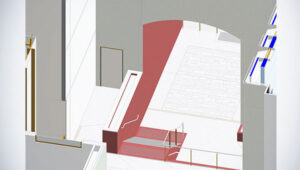
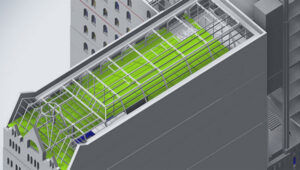


The Australian construction industry is rapidly embracing digital transformation, and one technology leading this shift is Scan to BIM Services in Australia. From commercial developments and healthcare facilities to heritage restoration projects, organizations are increasingly adopting Laser Scanning in Australia to create accurate digital representations of existing structures.
From renovation and refurbishment projects to facility management and heritage restoration, Scan to BIM enables architects, engineers, contractors, and building owners to create highly accurate digital representations of existing structures.
Traditional measurement methods often leave room for errors, omissions, and costly rework. By combining advanced laser scanning technology with Building Information Modeling (BIM), Scan to BIM delivers precise as-built models that improve project planning, coordination, and execution.
In this guide, we’ll explore the complete Scan to BIM process, its benefits, applications, and why it has become an essential part of modern construction and renovation projects across Australia.
What is Scan to BIM?
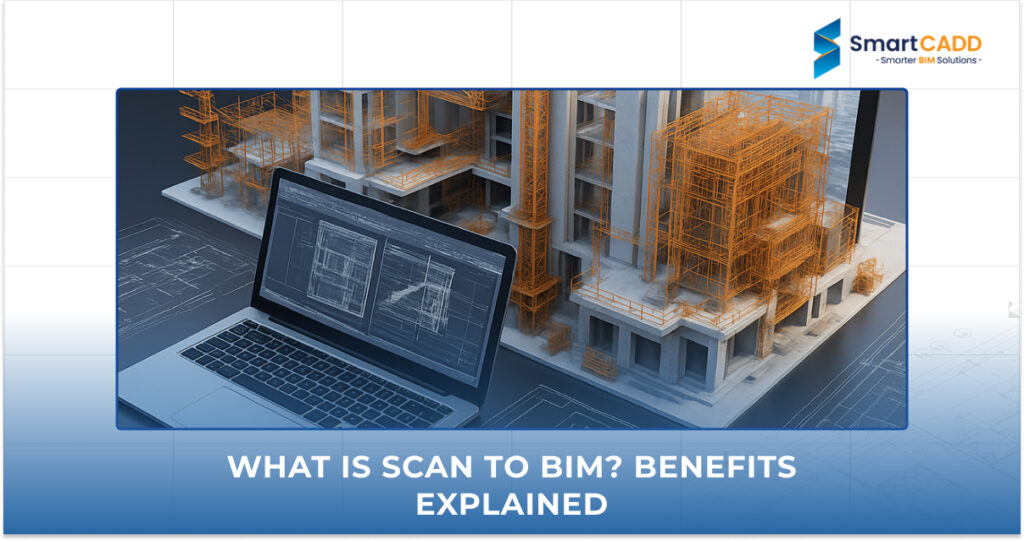
Scan to BIM is the process of converting laser-scanned point cloud data into an intelligent BIM model. Using advanced 3D laser scanners, millions of measurements are captured from an existing building or facility to create a highly accurate digital representation.
Often referred to as Point Cloud to BIM in Australia, this process transforms millions of laser-captured data points into intelligent BIM models that support planning, design, construction, renovation, and facility management activities.
The resulting BIM model contains architectural, structural, and MEP (Mechanical, Electrical, and Plumbing) information that can be used throughout the building lifecycle.
To understand the fundamentals of Scan to BIM and its key advantages, read our detailed guide on What Is Scan to BIM? Benefits Explained.
How Does Scan to BIM Work?
The workflow begins with reality capture using laser scanning technology. The collected point cloud data is then processed, cleaned, and converted into a BIM model using software such as Autodesk Revit.
The final model serves as a reliable source of information for design, renovation, construction coordination, facility management, and asset maintenance.
Scan to BIM vs Traditional Surveying
Aspect | Traditional Surveying | Scan to BIM
|
Data Capture | Manual Measurements | Millions of Laser Points |
Accuracy | Moderate | High Precision |
Speed | Time-Consuming | Rapid Data Collection |
Visualization | 2D Documentation | Intelligent 3D BIM Models |
Coordination | Limited | Enhanced Collaboration |
Future Use | Restricted | Lifecycle Asset Management |
Why Scan to BIM is Important in Modern Construction
Construction and renovation projects rely heavily on accurate existing conditions. Even small inaccuracies can lead to clashes, delays, change orders, and budget overruns.
Improved Accuracy
Laser scanners capture precise measurements with millimeter-level accuracy, significantly reducing errors during design and construction.
Reduced Rework
A reliable BIM model helps project teams identify issues before construction begins, minimizing costly rework and delays.
Faster Project Planning
Accurate digital models accelerate design development, space planning, and engineering workflows.
Better Collaboration
Architects, engineers, contractors, and facility managers can work from a single source of truth, improving communication and coordination.
Enhanced Facility Management
The BIM model continues to provide value long after construction by supporting maintenance, renovations, and asset tracking.
The Complete Scan to BIM Process
Understanding the Scan to BIM workflow helps stakeholders appreciate the value and precision involved in creating an accurate BIM model.
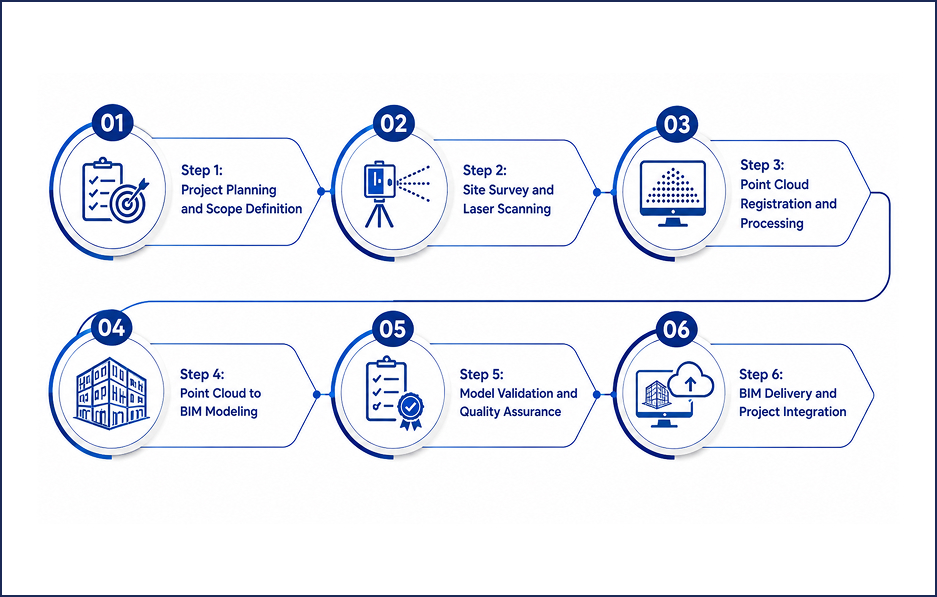
Step 1: Project Planning and Scope Definition
Every successful Scan to BIM project begins with detailed planning.
During this stage, project requirements are defined, including:
- Building type
- Project objectives
- Required Level of Development (LOD)
- Deliverables
- Accuracy requirements
- BIM standards
Clear project goals ensure the final model aligns with stakeholder expectations.
Step 2: Site Survey and Laser Scanning
The next step involves capturing existing conditions using advanced scanning technologies.
Common scanning methods include:
- Terrestrial Laser Scanning (TLS)
- Mobile Laser Scanning
- LiDAR Scanning
- Drone-Based Reality Capture
These technologies generate millions of data points representing the physical environment.
Modern Laser Scanning in Australia utilizes advanced LiDAR technology, terrestrial scanners, mobile mapping systems, and drone-based surveys to capture highly accurate existing conditions across commercial, industrial, healthcare, and infrastructure projects.
Step 3: Point Cloud Registration and Processing
Raw scan data is processed and merged into a unified point cloud.
This stage includes:
- Scan registration
- Data alignment
- Noise reduction
- Quality verification
- Accuracy validation
The result is a clean and reliable digital representation of the building.
The growing demand for Point Cloud to BIM in Australia has enabled project teams to reduce manual measurement errors while accelerating BIM adoption across the Australian AEC industry.
Step 4: Point Cloud to BIM Modeling
Experienced BIM specialists convert the point cloud into a detailed BIM model. Through advanced Point Cloud to BIM in Australia workflows, BIM specialists develop highly detailed architectural, structural, and MEP models that accurately represent real-world building conditions.
Key building elements modeled include:
Architectural Components
- Walls
- Doors
- Windows
- Floors
- Roofs
- Ceilings
Structural Components
- Columns
- Beams
- Slabs
- Foundations
MEP Systems
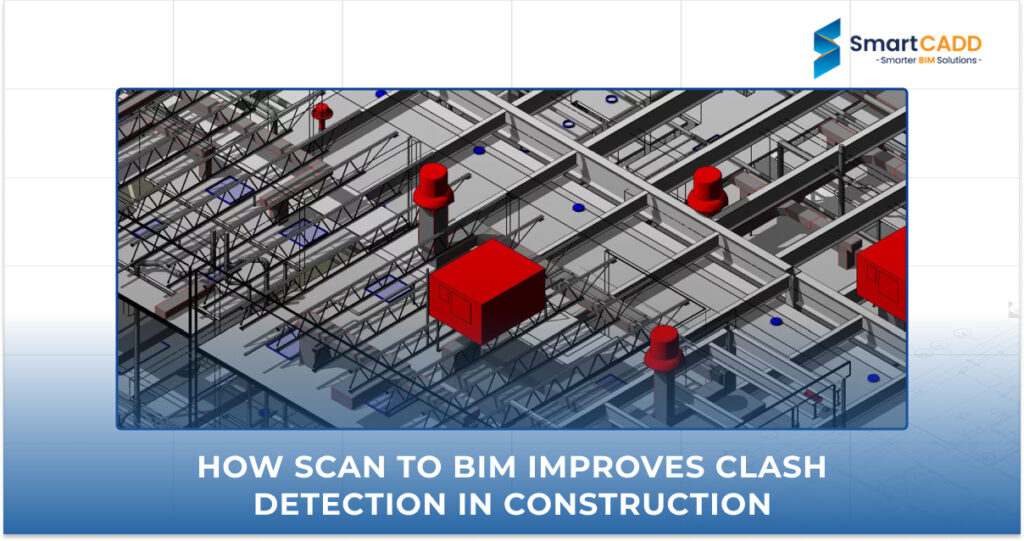
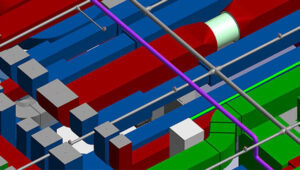
Accurate BIM models play a critical role in MEP Coordination in Australia, allowing engineers and contractors to identify clashes, optimize system layouts, improve constructability, and reduce costly site rework before construction begins.
- HVAC systems
- Electrical networks
- Plumbing systems
- Fire protection systems
The BIM model is typically developed in Autodesk Revit and can be exported to multiple formats.
Step 5: Model Validation and Quality Assurance
Accuracy is critical in Scan to BIM projects.
Quality checks include:
- Clash detection
- Dimensional verification
- Point cloud comparison
- Compliance checks
- Client review
This process ensures the BIM model accurately reflects existing site conditions.
Step 6: BIM Delivery and Project Integration
Once approved, the BIM model is delivered in the required formats.
Common deliverables include:
- Revit Models (.RVT)
- IFC Files
- Navisworks Models
- CAD Drawings
- As-Built Documentation
These deliverables support downstream activities such as design development, renovation planning, and facility management.
Scan to BIM Workflow Overview
The process can be summarized as:
Site Scanning → Point Cloud Creation → Registration & Processing → BIM Modeling → Quality Assurance → BIM Deliverables
Each stage contributes to creating an accurate digital twin of the existing building.
Levels of Development (LOD) in Scan to BIM
The required Level of Development determines the amount of information included in the BIM model.
LOD Level Description
LOD 100 Conceptual Representation
LOD 200 Approximate Geometry
LOD 300 Accurate Design Geometry
LOD 350 Enhanced Coordination Information
LOD 400 Fabrication-Level Detail
LOD 500 Verified As-Built Model
For most renovation and retrofit projects, LOD 300 or LOD 350 is commonly required.
To better understand how BIM standards enhance project accuracy and coordination, explore our blog on LOD in BIM Service: Reducing Errors and Improving Collaboration.
Applications of Scan to BIM
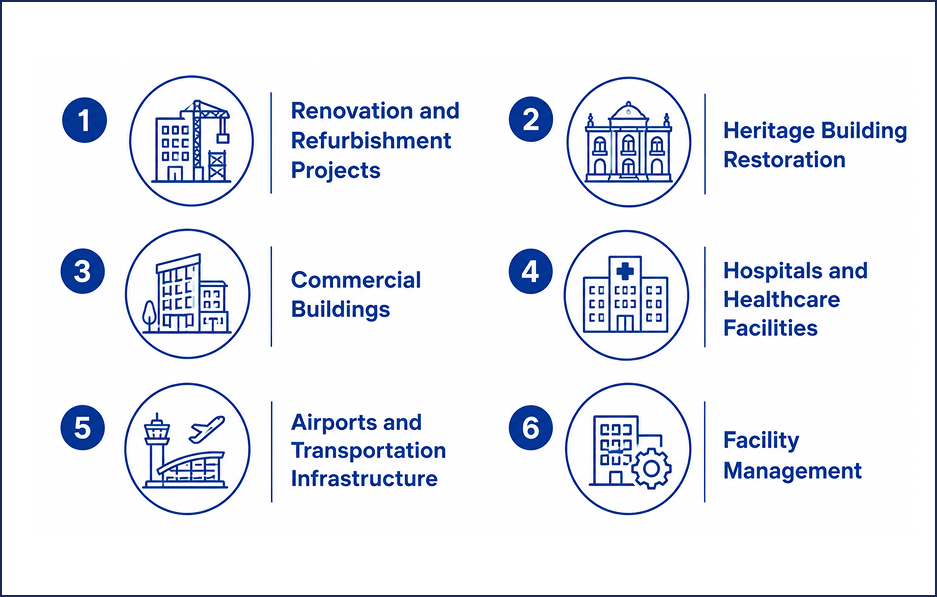
Renovation and Refurbishment Projects
Accurate BIM models help designers understand existing conditions before making modifications.
To achieve greater accuracy and efficiency in renovation workflows, explore why Scan to BIM for renovation projects in Australia is becoming an essential solution for capturing precise as-built conditions and reducing costly errors.
Heritage Building Restoration
Scan to BIM for Historical Buildings provides a reliable method for digitally preserving heritage assets while maintaining architectural integrity. By capturing intricate details and existing conditions, Scan to BIM supports restoration planning, conservation efforts, and long-term documentation of culturally significant structures across Australia.
Commercial Buildings
Scan to BIM Services for Commercial Buildings enable property developers, architects, and facility owners to create accurate as-built models for office buildings, retail centers, mixed-use developments, and corporate campuses. These models improve design coordination, renovation planning, and asset management throughout the building lifecycle.
Hospitals and Healthcare Facilities
Scan to BIM Services for Healthcare in Australia help hospitals, medical centers, and healthcare campuses document complex building systems with exceptional accuracy. These BIM models support facility upgrades, equipment planning, compliance requirements, and ongoing maintenance while minimizing disruption to critical healthcare operations.
Airports and Transportation Infrastructure
Large-scale facilities require highly accurate models for asset management and operational planning.
Facility Management
Scan to BIM for Facility Managers delivers a centralized digital asset that supports maintenance planning, space management, lifecycle tracking, and future renovations. Facility teams can leverage accurate BIM data to improve operational efficiency and make informed asset management decisions.
For a deeper look at how digital workflows are reshaping healthcare operations, explore our blog, How Scan to BIM is Transforming Healthcare Facility Management.
Challenges in Scan to BIM Projects
While Scan to BIM offers significant advantages, several challenges must be addressed.
Large Point Cloud Files
Laser scans generate massive datasets that require specialized software and expertise.
Complex Building Geometry
Irregular architectural features can increase modeling complexity.
Accuracy Requirements
Different projects demand varying levels of accuracy and detail.
Legacy Structures
Older buildings often contain undocumented modifications that complicate modeling efforts.
Data Coordination
Managing architectural, structural, and MEP information requires careful coordination throughout the project lifecycle.
Working with experienced BIM professionals helps overcome these challenges while ensuring high-quality deliverables.
How AI is Transforming Scan to BIM
Artificial intelligence is increasingly being integrated into Scan to BIM workflows.
Emerging AI technologies help:
- Automate object recognition
- Identify walls, doors, and windows
- Accelerate BIM modeling workflows
- Improve quality control
- Reduce manual effort
As AI-powered reality capture technologies continue to evolve, Scan to BIM projects are becoming faster, more scalable, and increasingly accurate.
To understand how emerging technologies are reshaping digital construction workflows, explore our blog on How AI Is Transforming Scan to BIM: Key Trends & Technologies.
Why Choose SmartCADD for Scan to BIM Services in Australia?
SmartCADD delivers comprehensive Scan to BIM solutions tailored to the needs of Australian construction, engineering, and facility management projects.
Our capabilities include:
- High-accuracy point cloud modeling
- Architectural, structural, and MEP BIM services
- Revit and IFC deliverables
- LOD 100–500 modeling
- Fast project turnaround
- Australian industry standards compliance
- Experienced BIM specialists and quality assurance processes
Whether you’re planning a renovation, managing a heritage restoration, or developing a digital twin strategy, SmartCADD provides reliable Scan to BIM services that help reduce risk and improve project outcomes.
Read our guide on choosing the right partner in Australia: How to Choose the Right Scan to BIM Company in Australia.
SmartCADD provides industry-leading Scan to BIM Services in Australia for commercial developments, healthcare facilities, industrial assets, educational institutions, heritage structures, and infrastructure projects. Our expertise in Laser Scanning in Australia, BIM modeling, and MEP Coordination in Australia helps clients reduce project risk while improving accuracy and collaboration.
Conclusion
As the construction and infrastructure sectors continue to embrace digital transformation, the need for reliable Scan to BIM Services in Australia is becoming increasingly important. From commercial and healthcare facilities to heritage buildings and ongoing facility management, accurate digital models help stakeholders make informed decisions throughout the building lifecycle.
By combining reality capture technologies with BIM-driven workflows, organizations can improve project coordination, reduce rework, and enhance overall efficiency. Investing in accurate building data also supports more sustainable and cost-effective project delivery.
Partnering with an experienced provider like Smartcadd ensures access to precise, high-quality BIM models that support planning, design, construction, and long-term asset management needs.