
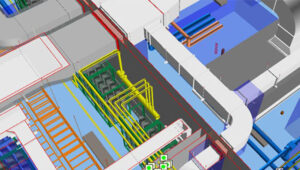
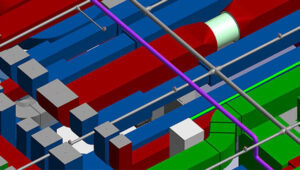

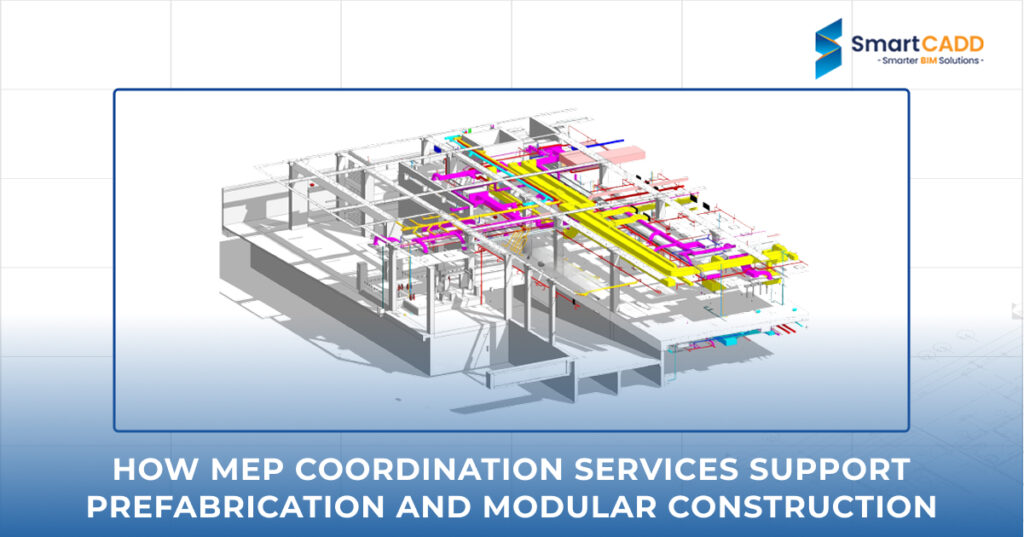

When a building uses prefabrication or modular construction, many parts are made in a factory first. Those parts have to fit together when they reach the site without issues. That only works if everything inside the walls- like pipes, wires, and ducts- is planned ahead of time. MEP coordination services help make sure this planning is done the right way from the start and help teams check that all these parts fit in the right place.
This guide walks through how MEP coordination services support teams with prefabrication and modular construction. The goal is to give you a clear look at how good coordination keeps the project moving without delays.
Why Prefabrication and Modular Construction Need Strong MEP Coordination
The construction industry is steadily moving toward off‑site manufacturing. More teams are using volumetric modular units, panelized systems, and other factory‑built methods to speed up projects and reduce on‑site work. As this shift grows, strong MEP coordination is no longer a “nice to have.” It is part of basic project discipline.
MEP coordination services help keep prefabricated work accurate and predictable. When building systems are planned early and checked in a shared 3D model, teams catch clashes before anything reaches the factory. That means less rework and fewer fixes on-site. In simple terms, good coordination supports speed with better installation and cost control.
If you want to check out industry trends and data on the growth of modular construction, you can go through the Dodge Construction Network report.
Pressure on modular workflows is also increasing. Owners want faster delivery. Contractors rely on off‑site production to meet tight deadlines. But when coordination is weak, even a small design miss can slow fabrication, delay shipments, and disrupt the schedule. Factories pause, site crews wait, and costs rise.
Strong MEP coordination keeps this under control. It gives teams clear, reliable information so they can build with confidence, both in the factory and on site.
Learn more about the benefits of coordinated design in our blog, Why MEP Coordination Is Important for Clash-Free BIM Models.
The Real Risks of Poor MEP Coordination in Prefabrication
Prefabrication only works when every part is planned properly. When MEP coordination is weak, problems show up quickly, and they are expensive to fix.
- When layouts are wrong, the factory has to stop and sort the issue out. Even a small error can slow or stall the whole production line.
- If pipes, ducts, or conduits do not line up when the modules arrive, crews end up rebuilding work that was supposed to be finished.
- Poor planning can leave openings in the wrong place or create cramped spaces. That makes installation harder and can create unsafe conditions for future maintenance.
- Without clear coordination, each trade works from its own plans. This leads to clashes and confusion. This needs extra time spent fixing problems that could have been avoided with better alignment.
- When modules do not fit as expected, installation slows down. Staff wait, and the project loses one of the main reasons to use prefabrication in the first place: faster delivery.
With MEP BIM modeling services, teams get clearer models and fewer surprises on the factory floor.
For a deeper understanding, explore our Complete Guide to MEP Coordination in Building Projects.
How MEP Coordination Services Enable Prefabrication Success
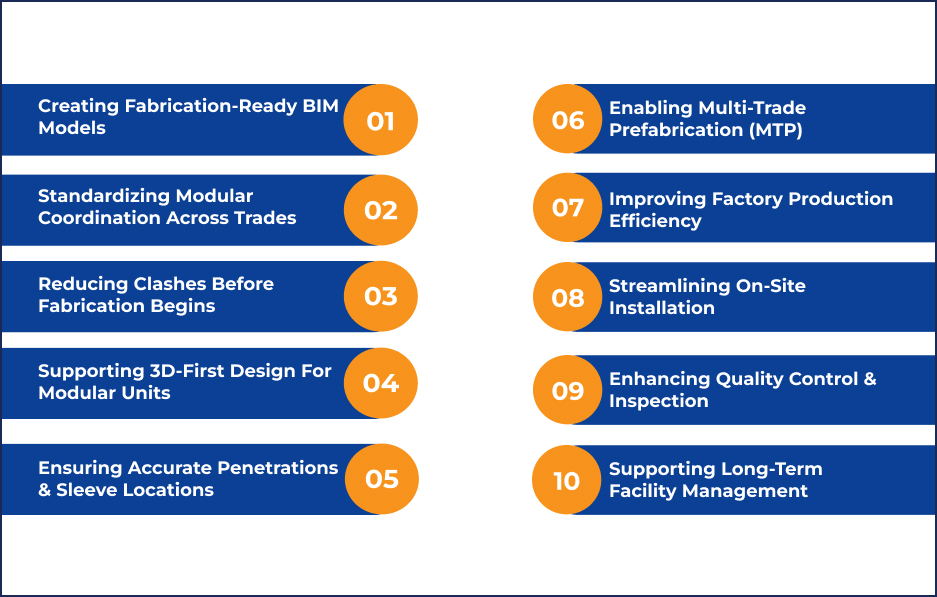
1. Creating Fabrication‑Ready BIM Models
Prefabrication depends on clear, reliable models. If the model is not right, the factory can not build with confidence. Strong BIM MEP coordination holds the process together. It gives every trade the same information and removes guesswork before production starts.
- LOD 350-400 modeling for accurate shop drawings: At this level, every pipe, duct, and conduit is shown the way it will actually be built. That makes shop drawings more accurate and cuts down on surprises later in the field.
- Fabrication‑ready modeling: When the model is created with fabrication in mind, the factory gets what it needs: exact sizes, connection points, and clear routes. This helps teams produce parts that fit the first time.
2. Standardizing Modular Coordination Across Trades
Prefabrication works best when all trades follow the same plan. HVAC, plumbing, fire protection, and electrical layouts need to line up from one module to the next. If they do not, the factory runs into clashes and delays.
- Coordinating HVAC, plumbing, fire protection, and electrical layouts: Each system has its own needs, but they share the same space. Standard layouts help everything fit without continuous changes.
- Using modular coordination grids for uniform module design: A simple grid gives every trade the same reference point. It keeps routes consistent and makes fabrication easier.
- Trade coordination process: Clear steps help teams stay on the same page. When everyone follows the same process, the final modules fit the way they should.
3. Reducing Clashes Before Fabrication Begins
Regular checks help teams spot issues before anything is cut or built.
- Weekly clash detection cycles using MEP clash detection services: Weekly clash reviews pick up conflicts early in the model. This keeps the design clean and cuts down on last‑minute fixes.
- Preventing duct, pipe, and cable tray conflicts in tight modular spaces: Modular spaces are tight, so even small overlaps can cause big trouble. Early checks help ducts, pipes, and cable trays share space without clashing.
- Early clash prevention: The earlier a clash is found, the easier it is to fix. This keeps fabrication moving and reduces delays later.
For insights on minimizing delays and budget overruns, read How MEP Clash Detection Services Save Time and Money By Preventing Construction Conflicts?
4. Supporting 3D-First Design for Modular Units
A 3D‑first approach shows the way how all systems fit inside a module before anything is built.
- 3D MEP coordination for volumetric modules: Volumetric modules have very limited space. A shared 3D model helps each trade see where their systems run and how they connect with others.
- Detecting spatial conflicts in multi‑trade racks: Multi‑trade racks bring several services into one frame. A 3D view makes it easier to spot overlaps and tight spots before they reach the factory floor.
- 3D routing benefits: 3D routing shows the exact path of all building services. It helps avoid clashes and supports cleaner routing. It also keeps fabrication on schedule.
5. Ensuring Accurate Penetrations and Sleeve Locations
Getting penetrations right keeps module stacking smooth. Even small shifts can slow work down on-site.
- Avoiding misaligned openings during module stacking: Openings need to line up from one module to the next. When they do not, the staff end up losing time in cutting and patching.
- Embedding clearance zones in BIM families: Built‑in clearance zones help teams place equipment and sleeves in the right spot. This lowers the risk of clashes and rework.
- Sleeve accuracy: Accurate sleeve locations keep installation simple. It also helps avoid fixes later in the field.
6. Enabling Multi‑Trade Prefabrication (MTP)
Multi‑trade prefab works best when all systems are planned together.
- Coordinating racks, risers, corridor modules, and bathroom pods: These elements need to work as one unit. When all elements follow the same layout, each trade knows where its work fits.
- Using MEP BIM modeling services to unify fabrication drawings: Shared BIM models bring all trades onto one platform. This keeps fabrication drawings aligned and makes it easier to spot gaps or conflicts before anything is built.
- Multi‑trade prefab: When trades build from the same plan, multi‑trade prefab is faster and easier to install.
7. Improving Factory Production Efficiency
Clash‑free models help keep work moving on the shop floor.
- Clear models reduce stoppages on the shop floor: Staff can focus on building instead of fixing mistakes when the model is clean. This means fewer pauses and less confusion throughout the production process.
- Standardized assemblies improve repeatability: work is predictable by using the same layouts and parts in all modules. Standardized assemblies help teams build faster with fewer errors.
- Factory workflow optimization: Simple and consistent processes keep production steady. Clear workflows support smoother handoffs and reduce delays.
8. Streamlining On‑Site Installation
A good model makes on‑site work smoother. Modules fit the way they should, and staff spend less time fixing things in the field.
- Modules fit together without field adjustments: When modules are coordinated well, they connect cleanly. Staff do not have to rework parts on site.
- Faster stacking and connection of MEP systems: Clear layouts help teams stack modules faster and tie in services with fewer delays.
- Installation speed: When everything lines up, installation moves quickly and stays predictable.
9. Enhancing Quality Control and Inspection
Strong quality control starts with a reliable model. When the digital version is accurate, work in the factory and on-site stays consistent.
- Digital twins and model‑based QA/QC: Digital twins give teams a clear view of what is planned and what is already built. Model‑based checks help spot issues early.
- Using BIM to verify dimensions before shipping: BIM makes it easier to confirm sizes and clearances before a module leaves the factory. This reduces surprises on site and helps installations go more smoothly.
- Model‑based QA: Checking work against the model keeps quality steady from module to module. It also makes it easier to prove that what was designed is what was built.
10. Supporting Long‑Term Facility Management
Good facility management starts with clear and reliable data. When information is organized from day one, owners can maintain the building without guesswork.
- Asset tagging and COBie integration: Asset tags and COBie data give teams a simple way to track equipment. Records stay consistent and easier to update over the life of the building.
- Digital twins for modular buildings: A digital twin shows the way how the building was designed and how it actually performs.
- Lifecycle data integration: When all data stays connected, managing the building over time becomes easier. It supports better decisions long after handover.
System-Level Benefits of MEP Coordination in Modular Construction
Faster Project Delivery
Strong MEP coordination services help teams move faster.
- Shorter design cycles
- Reduced on‑site labor
- Schedule compression
Lower Total Installed Cost (TIC)
When clashes are removed early, the whole project becomes more predictable.
- Less rework
- Higher factory efficiency
- Cost predictability
Higher Safety and Quality Standards
Factory‑built work is easier to control and inspect.
- Controlled factory environments
- Fewer field conflicts
- Safety improvements
What a Fully Coordinated Modular Project Looks Like
A fully coordinated modular project feels steady from the start.
- When modules are planned well, they fit together without cuts or shifts on site.
- Clean models remove the big conflicts that slow teams down.
- With fewer surprises, schedules stay on track, and costs stay close to the plan.
- With MEP Coordination Services, steps stay clear, layouts stay consistent, and handoffs move smoothly from one stage to the next.
Discover the critical role of MEP services in BIM implementation in our detailed guide.
Before/After Modular Coordination Comparison:
Condition | Before coordination | After coordination |
Module fit | Frequent on‑site adjustments | Seamless stacking with no cuts |
Clashes | Recurring conflicts between trades | Zero major clashes in the field |
MEP alignment | Inconsistent routing across modules | Clean, repeatable layouts |
Schedule | Unpredictable timelines | Stable, predictable schedules |
Cost impact | Rework and overruns | Tighter cost control |
Workflow | Disjointed handoffs | Smooth, coordinated workflow |
Conclusion: Next Steps to Improve Your Modular Coordination Workflow
If you want smoother installs and fewer surprises on site, start with a few practical steps. These help you see where your current process stands and what needs attention.
- Request a BIM coordination audit
- Book a prefab readiness assessment
- Get a quote for MEP coordination services
Teams that need outside support can lean on specialists like SmartCADD. Our MEP BIM coordination team handles full‑project workflows- from early modeling to final handover and can step in where your in‑house team needs help.
If you want to improve your modular coordination workflow, our team is ready to help you out.