



If you work in construction or electrical contracting in Australia, you have probably heard the term BIM Electrical more and more often lately. And there is a good reason for that. Projects are getting bigger, deadlines are getting tighter, and the cost of on-site mistakes is going up every year.
Electrical BIM modeling is one of the most practical tools that contractors and project managers are using right now to stay ahead of all of this. It is not just a technology trend. Today, it is changing how electrical work gets planned, coordinated, and delivered on real Australian job sites.
This article will break down exactly what it means, why it matters for Australia specifically, and how to get started without the usual headaches.
What is Electrical BIM Modeling?
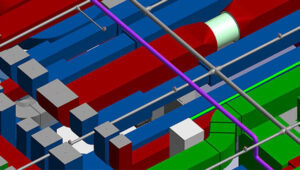
BIM stands for Building Information Modeling. In simple terms, it means creating a detailed 3D digital model of a building before any physical work begins. BIM Electrical specifically focuses on modeling all the electrical systems inside that building, such as things like power distribution, cable trays, switchboards, conduits, lighting, and data points.
Instead of working from flat 2D drawings that are easy to misread, everyone on the project works from the same intelligent 3D model. Instead of just having shapes, the model also contains real information. It tells you exactly where every cable tray runs, what clearances are needed, and how the electrical system connects with everything else in the building. That kind of clarity, which comes with BIM electrical, saves a huge amount of time and money.
To build a stronger foundation in BIM workflows, explore our guide on BIM for Electrical Engineers: Key Concepts Explained, which covers the essential principles, tools, and applications every electrical professional should know.
Top 5 Ways Electrical BIM Boosts On-Site Productivity
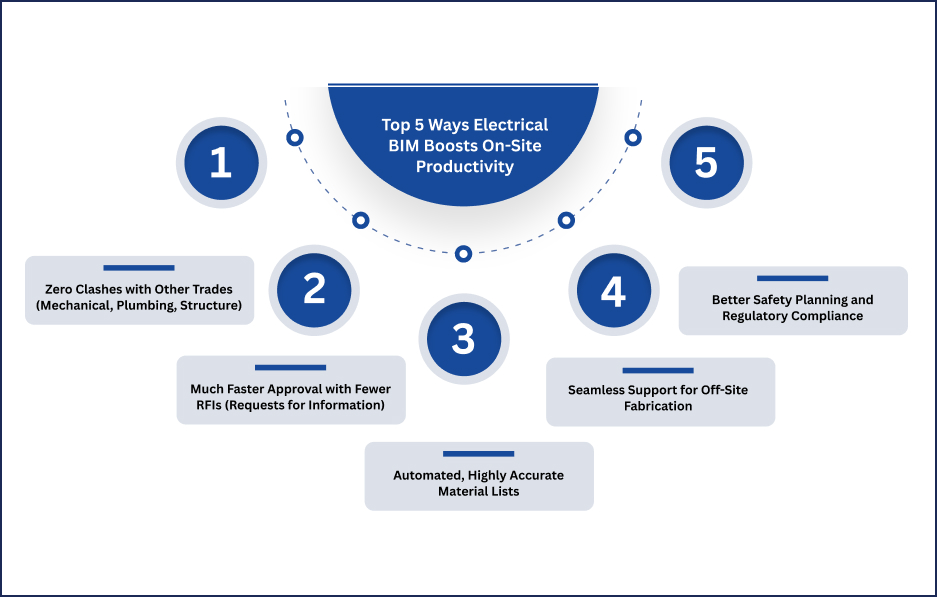
Zero Clashes with Other Trades (Mechanical, Plumbing, Structure)
One of the biggest time-wasters on any construction site is when two different trades show up and realize their work cannot both fit in the same space. A duct clashing with a cable tray, or a pipe running through where conduit was planned, these things happen constantly when teams are working from separate 2D drawings.
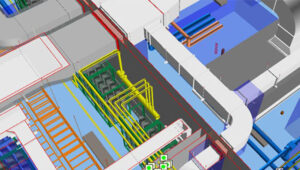
With electrical BIM modeling, all trades are modeled together in the same 3D environment. Clash detection software automatically flags conflicts before anyone lifts a tool on site. This means fewer surprises, fewer delays, and far less rework.
Much Faster Approval with Fewer RFIs (Requests for Information)
RFIs slow projects down badly. When an electrician on-site cannot figure out how to route cables through a congested ceiling space, work stops while someone sends a question back to the designer.
With a well-coordinated BIM electrical model, most of those questions are already answered before anyone sets foot on site. Approval processes also move faster because reviewers can see exactly what is being proposed in 3D, rather than trying to interpret confusing 2D plans.
Automated, Highly Accurate Material Lists
Manually creating the list of raw materials required is time-consuming and prone to error. With electrical BIM modeling services, the model automatically generates material quantities, like conduit lengths, cable tray sizes, fitting counts, and more.
This means procurement teams get accurate lists faster, there is less over-ordering, and there are fewer situations where work stops because something was not ordered on time.
Seamless Support for Off-Site Fabrication
Pre-fabrication is becoming a major productivity driver for Australian electrical contractors. When subassemblies like cable tray sections or switchboard brackets are built in a controlled workshop environment and then simply installed on site, labor hours drop significantly.
But this only works when the modeling is precise enough to trust. BIM electrical modeling produces exactly the level of accuracy that prefabrication requires, making off-site work a genuine option rather than a risky gamble.
Better Safety Planning and Regulatory Compliance
A BIM electrical 3D model makes it much easier to identify safety risks before they become real problems. These safety risks can arise anywhere, such as employees working at height situations, confined spaces, or areas where multiple trades will be working at the same time. This kind of visual planning is also valuable when it comes to demonstrating compliance with Australian Standards and Work Health and Safety (WHS) regulations.
Why the Australian Market Urgently Needs Electrical BIM
The Reality of High Australian Labor Costs
Australia consistently ranks among the most expensive places in the world to hire skilled tradespeople. That means every hour of rework, every clash that gets discovered on site rather than in the model, and every delay caused by missing information costs far more here than it does in most other countries. Electrical BIM services in Australia directly address this by reducing rework and keeping projects moving efficiently.
Stricter Project Schedules in Major Cities
In Sydney, Melbourne, and Brisbane, construction activity is intense and competition for both trades and crane time is fierce. In such an environment, projects cannot afford extended delays. BIM electrical coordination helps keep electrical works tracking to the program by removing uncertainty from the construction phase and enabling tighter sequencing between trades.
Complex Building Sectors Dominating Australia
Australia’s construction pipeline is dominated by large, technically complex projects, like hospitals, universities, mixed-use towers, and now data centers. These are not simple buildings where a few flat drawings will do. They have congested services corridors, strict performance requirements, and long lists of stakeholders who all need to be kept informed. Electrical BIM modeling provides the level of detail and coordination that these projects genuinely demand.
Learn how BIM streamlines project coordination and minimizes costly disruptions in our guide on How BIM Reduces Electrical Installation Delays on Site in Australia.
Powering Australia’s Massive AI and Data Centre Boom
Australia is currently experiencing a significant wave of data center construction, driven largely by the growth of AI infrastructure and cloud computing. This sector places some of the most demanding requirements on electrical teams of any building type.
Managing High-Density Power and Tight Routing
Data centers require enormous amounts of electrical infrastructure packed into relatively tight spaces. High-voltage distribution, uninterruptible power supply systems, busbars, and dense cable management all need to co-exist without conflict. BIM electrical modeling is essentially the only practical way to coordinate all of this at the required level of precision.
Protecting Long-Lead Equipment Timelines
In data centers, certain electrical equipment, like large transformers, switchgear, and generators, can have lead times of many months. Getting the dimensions and routing requirements wrong means expensive delays that cannot easily be recovered. Detailed electrical BIM modeling services mean that equipment interfaces and installation sequences are confirmed in the model long before the equipment arrives on site.
Accelerating Strict Local Compliance and Testing
Data centers in Australia must meet demanding electrical standards and often require third-party commissioning verification. Having well-produced as built electrical drawings generated from the BIM model makes this process significantly faster and more reliable. Inspectors and commissioning teams get documentation that accurately reflects what was installed, rather than drawings that may have drifted from reality during construction.
Discover how BIM-driven electrical design improves coordination, efficiency, and reliability in modern data centers in How BIM Electrical Is Transforming Data Center Design and Construction.
Overcoming the Setup Hurdle: Why Outsourcing Your BIM Makes Sense
The In-House Challenge
Many electrical contractors understand the value of BIM electrical but struggle to implement it internally. Building an in-house BIM means purchasing software licenses, investing in hardware, and dedicating time to training, before a single productive hour is delivered on a real project.
The Skills Shortage
Australia is experiencing a well-documented shortage of skilled BIM professionals. Finding experienced Revit modelers who understand electrical systems deeply enough to produce coordination-ready models is genuinely difficult. This skills gap is one of the main reasons contractors either avoid BIM electrical entirely or end up with models that are not detailed enough to be truly useful.
The Balanced Approach
Outsourcing electrical BIM modeling services to a specialist provider solves both problems. You get access to experienced modelers immediately, without the overhead of building an internal team. For most Australian electrical contractors, this is the most practical and cost-effective way to access high-quality BIM electrical modeling on every project, regardless of project size.
Supercharge Your Next Project with SmartCADD’s Electrical BIM Expertise
Tailored Solutions for Australian Contractors
SmartCADD is a trusted BIM company serving architects, engineers, and contractors across Australia. We understand the Australian standards, typical project structures, the expectations of head contractors, and the pressures that electrical subcontractors face on complex builds.
As a trusted provider of electrical BIM services in Australia, our work spans healthcare, commercial towers, educational facilities, sports venues, and data centers, which means we bring real project experience to every model we produce.

What SmartCADD Brings to Your Project
Clash-Free Coordination
We produce fully coordinated BIM electrical models that are checked against all other services and structure before they leave our team. That means by the time your crew gets on site, the routing is confirmed, and the major headaches have already been solved.
Field-Ready Documentation
Every set of drawings we produce is designed to be used by tradespeople on site, not just by designers in an office. Clear, accurate, and fully dimensioned as built electrical drawings that reflect the final installed condition for operations and maintenance teams.
Prefabrication-Ready Layouts
If your business is moving toward prefabrication, our models are built with that workflow in mind. Assemblies are modeled with the precision that workshop fabrication demands, so your off-site and on-site teams are working from the same reliable information.
Why Partner with SmartCADD?
We have completed hundreds of projects across Australia, New Zealand, the USA, and beyond. Our repeat client rate reflects the consistency of our quality and our commitment to meeting deadlines even under tight timeframes. Our clients range from small specialist contractors to large Tier 1 builders, and we tailor our service to match the scale and complexity of each project.
Whether you need comprehensive electrical BIM services in Australia from the coordination stage through to final as built electrical drawings, or you need targeted support for a specific part of your project, we can help.
Conclusion
BIM Electrical is no longer something that only the largest head contractors think about. It is becoming a standard expectation across all types of commercial and industrial construction in Australia. The benefits are real and measurable, like fewer clashes, less rework, faster approvals, better material management, and stronger compliance outcomes.
For electrical contractors operating in a high-cost, high-expectation market like Australia, electrical BIM modeling is one of the most direct investments you can make in your project delivery capability. And with the right outsourcing partner, the barrier to getting started is much lower than most people think.


