

Introduction
Imagine bridging the gap between a property’s physical reality and its digital counterpart—now possible with Scan to BIM. This process uses 3D laser scanning to capture the existing structure of buildings and converts them into digital BIM models, enabling smarter real estate management, enhanced decision-making, and streamlined operations across portfolios.
What Is Scan to BIM?
Scan to BIM starts with 3D scan real estate using advanced laser scanning that captures surface data as point clouds. This forms the foundation of a detailed digital replica. Next, the scan to BIM process transforms these point clouds into actionable BIM models through tools like Autodesk Revit. Acting as part of 3D BIM modeling services, it bridges physical structures and phenomenal digital representation—empowering property professionals to manage, model, and monetize real estate assets effectively.
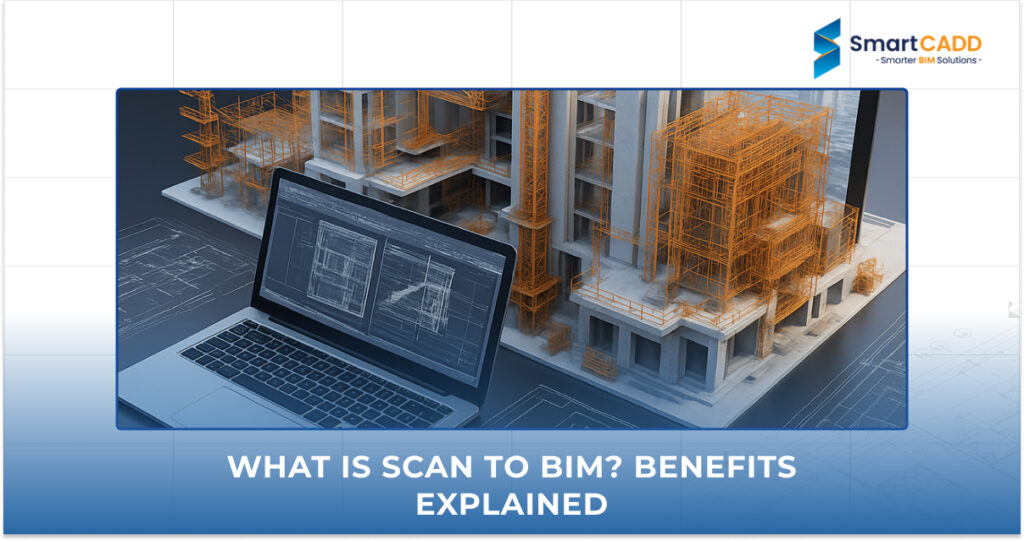
If you’re new to the concept of Scan to BIM, you can explore its fundamentals and key benefits in detail here.
Core Components & Workflow
3D Laser Scanning
Highly accurate laser scanners capture millions of data points to form a point cloud—essentially a digital fingerprint of a structure.
Point Cloud to BIM Conversion
Using software like Revit, Navisworks, or Autodesk ReCap, the point cloud is refined and modeled into detailed BIM elements, from walls and windows to essential MEP systems, achieving millimeter-level precision. The scan to BIM process at SmartCADD follows this exact workflow: site surveying → data acquisition → processing → conversion → modeling → validation → refinement → delivery.
Tools Like Revit, Recap, Navisworks
These tools are critical to ensure accurate transfer from reality (scanned data) to digital (BIM models), enabling coordination, clash detection, and detailed design.
Why It Matters in Real Estate Portfolios

Accurate As Built Documentation
Real estate 3d scanning eliminates the guesswork of outdated plans. Detailed as built models reduce misalignment and risk by reflecting the property’s real conditions precisely.
Enhanced Property Management
With 3D BIM modeling services, facility managers can maintain, renovate, and operate buildings more effectively by referencing up-to-date digital twins.
Faster, Smarter Decisions
Investors and developers benefit from visually precise BIM models that allow comprehensive assessments and informed decision-making across portfolios.
Engaging Visualization
With immersive 3d modeling revit, and 3D walkthroughs, marketing becomes compelling—helping lease or sell properties faster.
Operational Efficiency
The scan to BIM process streamlines workflows, minimizing rework and miscommunication by enabling precise model coordination and renovation planning.
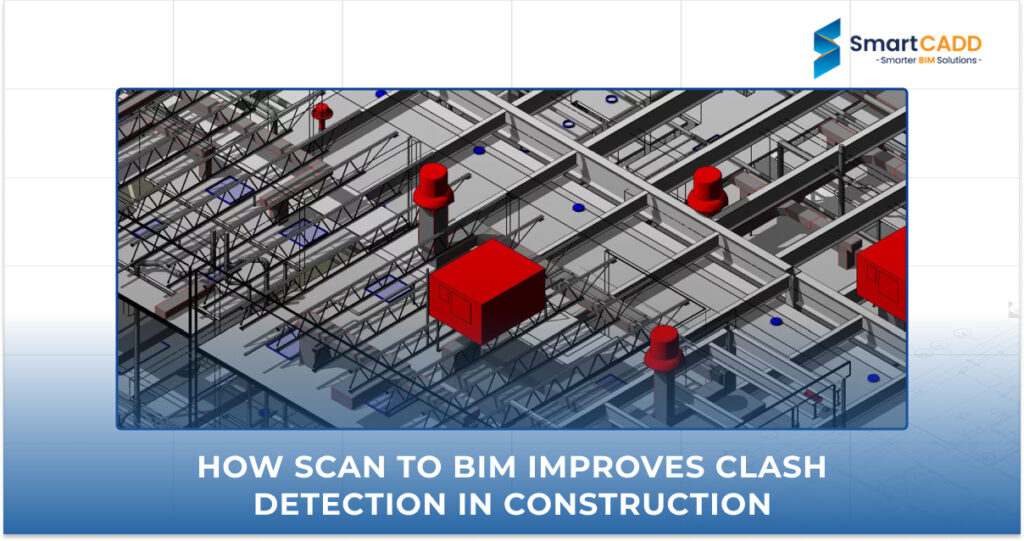
Scan to BIM also plays a crucial role in improving clash detection during construction—learn more about how it enhances coordination and reduces errors here.
Sustainability and Energy Analytics
Accurate models allow for energy modeling and green retrofits, helping reduce energy usage and improve building sustainability.
Risk Mitigation
By detecting clashes and structural concerns early on in Scan to BIM services, projects reduce risks, downtime, and cost overruns.
Applications Across Real Estate Sectors
- Commercial Real Estate: Ideal for tenant fit-outs, retrofits, and space optimization with scan to BIM revit ensuring easy coordination.
- Residential Properties: Offers buyers high-fidelity 3d scan real estate models for confidence and marketing enhancement.
- Historic and Heritage Buildings: Captures ornate detail for preservation and restoration, with precision that respects architectural integrity.
- Specialized Facilities (hospitals, schools): ⮕ Supports complex spatial and mechanical systems, expansions, and high-stakes facility management.
There are important differences between residential and commercial projects when it comes to Scan to BIM—some of the key differences are explained in detail here.
Integrating Scan to BIM Into Your Real Estate Portfolio Strategy
Add Scan to BIM Services to Your Vendor Network
Future-proof your assets by incorporating expert providers like SmartCADD who deliver precise 3D BIM modeling services.
Training & Adoption
Empower your team with knowledge in 3d modeling revit workflows to fully leverage BIM capabilities.
Data Management
Implement systems for handling large point cloud datasets, version control, and secure storage—essential for long-term digital asset management.
Cross‑functional Collaboration
Encourage architects, engineers, and facility managers to collaborate around BIM models—fostering seamless project coordination.
Conclusion
By embracing Scan to BIM, supported by scan to bim services, 3d scan real estate, and 3D BIM modeling services, real estate portfolios gain unmatched precision, operational insight, and efficiency. From reducing risk to accelerating property strategy, Scan to BIM revolutionizes how we manage and monetize building assets.
Ready to elevate your real estate portfolio with smarter, future-ready property management? Trust SmartCADD to deliver expert scan to BIM solutions that transform your assets—contact us today!