
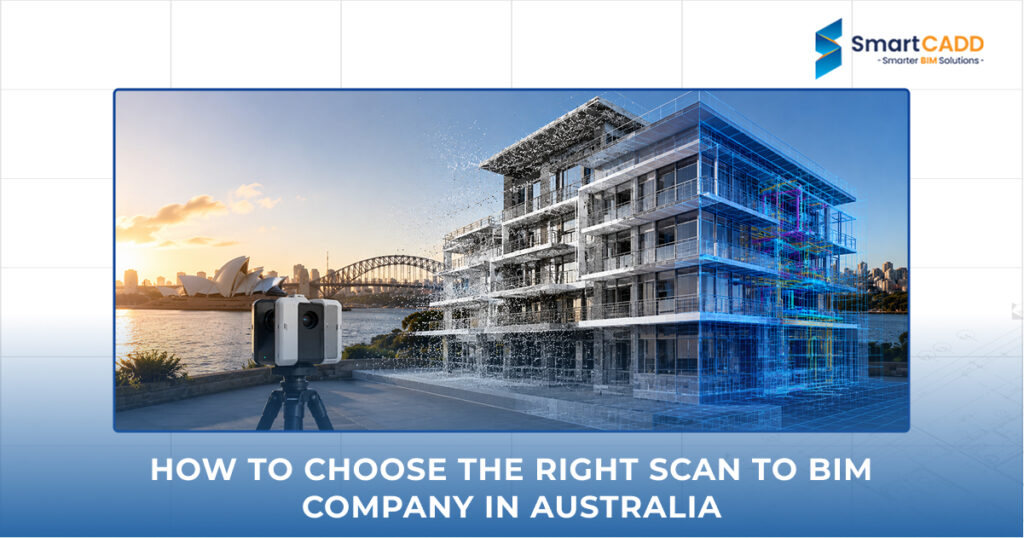

Choosing the right Scan to BIM company in Australia means finding a partner who turns laser-scanned point clouds into accurate, standards-compliant 3D models you can actually build from. The strongest providers pair survey-grade hardware with skilled Revit modellers and a documented quality process tied to local benchmarks. Get that decision right and everything downstream becomes easier.
For contractors, construction companies, and architects handling refurbishments, heritage works, or dense MEP coordination, the supplier you appoint shapes the entire programme, clash detection, fabrication, and handover all rest on the model. A flawed model breeds rework on site; a precise one removes risk before a single trade arrives. This guide sets out exactly what to assess, which Australian standards apply, and the questions worth asking before you commit.
What Is Scan to BIM, and Why Does Provider Choice Matter?
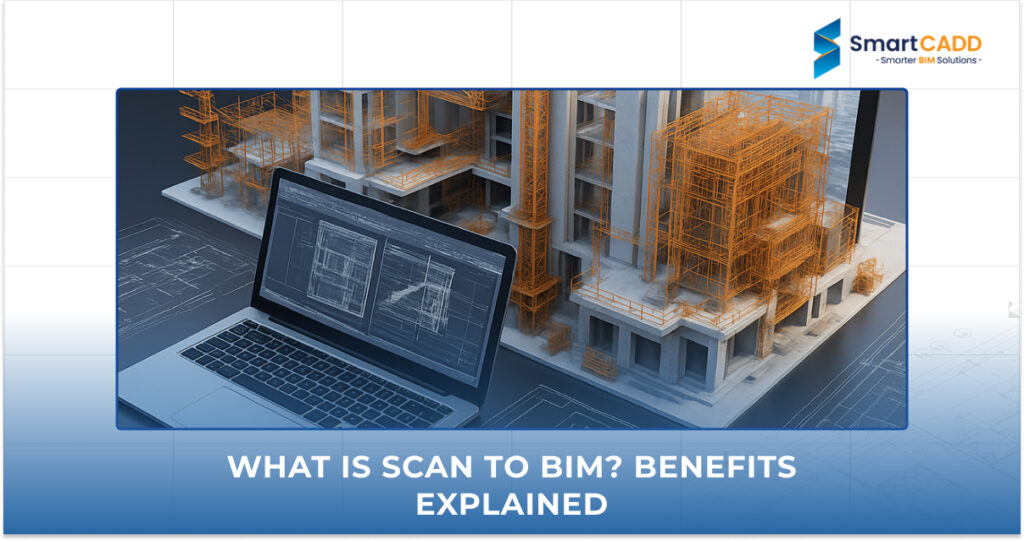
Scan to BIM is the process of capturing a physical asset with a 3D laser scanner, then converting the resulting point cloud into an intelligent Building Information Model. The deliverable is a coordinated Revit model that reflects true site conditions rather than outdated or missing drawings.
How do you choose the right Scan to BIM company in Australia?
- Assess four things:
- Survey-grade scanning equipment,
- Demonstrated modelling expertise in Revit,
- Australian BIM Standards Compliance: Models built strictly to local layer structures, naming conventions, and industry BIM requirements.
- Local project experience separates strong providers from the rest.
Provider choice matters because the model becomes the single source of truth for every design and construction decision that follows. If you want a refresher on the fundamentals first, our explainer on what Scan to BIM is and the benefits it delivers is a useful starting point before you start shortlisting suppliers.
What to Look for in Scan to BIM Services in Australia
Not every supplier offering scan to BIM services in Australia works to the same standard. The market stretches from one-person survey outfits to full Scan to BIM teams running architecture, structure, and MEP under one roof. Weigh candidates against the criteria below rather than the headline price alone.
Survey-Grade Equipment and Laser Scan Modeling Capability
Ask which scanners a provider runs and what accuracy they certify. Terrestrial laser scanners, handheld SLAM units, and drone photogrammetry each suit different sites, and a serious team will explain why they chose a particular setup for yours. Reliable laser scan modeling depends on clean registration of many scan positions into one coherent point cloud, usually targeting positional accuracy in the 6–10 Millimeter range. Pairing LiDAR for interiors with photogrammetry for façades captures everything inside and out.
Software Stack and Deliverable Formats
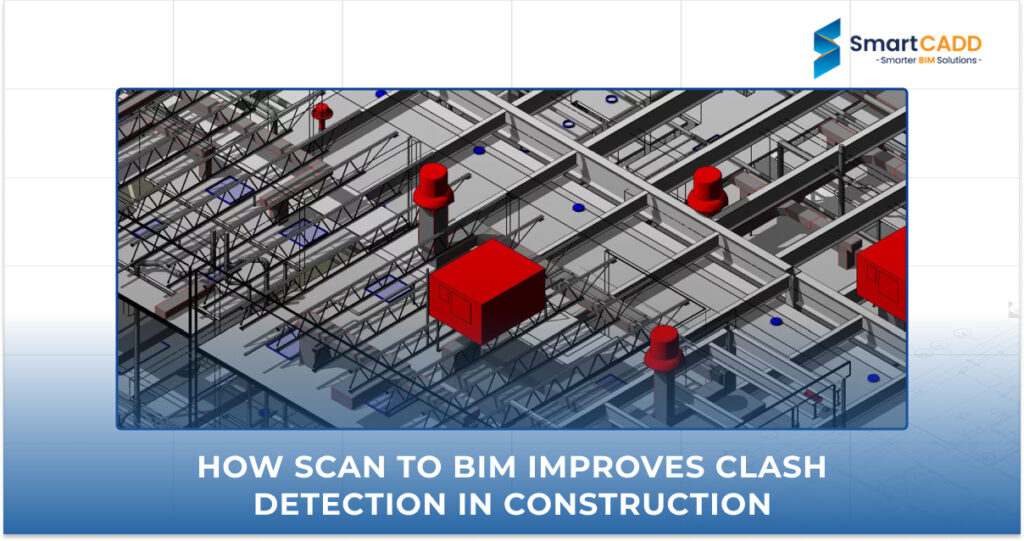
A capable Scan to BIM team should model in Revit and coordinate in Navisworks, with clash and issue tracking handled through Revizto, BIMCollab, or BIM 360. Confirm the native file types you will receive, the agreed Level of Development (LOD 200, 300, or 350), and whether the model is structured to feed facility management once the project is complete. These details decide how usable the file is months later.
A Documented Quality Process
The deliverable is only as trustworthy as the checking behind it. Reputable Scan to BIM firms verify geometry directly against the point cloud, flag any deviation, and have a senior modeller sign off on every file before release. Skip this step, and small errors travel straight to the site, where they cost the most to fix.
Aligning Scan to 3D Modelling with Australian Standards
Scan to 3d modelling for local projects should map to recognised Australian frameworks, not generic offshore templates pulled from another market. The NATSPEC National BIM Guide — refreshed in 2022 to align with the AS ISO 19650 series — sets out how information is named, organised, and exchanged across an asset’s whole lifecycle, giving every stakeholder a common language.
Building work must also satisfy the National Construction Code (NCC 2022), and a faithful as-built model supports compliance checks for fire egress, accessibility, and services coordination. A provider fluent in scan to 3d modelling against these references hands you documentation that survives scrutiny during approvals and tenders. It is worth asking whether they can produce an Exchange Information Requirements–aligned deliverable, because many converters simply cannot.
Laser Scan Modeling vs Traditional Survey: What You Are Actually Buying
Traditional survey captures discrete, hand-picked measurements; laser scan modeling captures millions of points in minutes and records the whole environment at once. For a Scan to BIM project on a live site, that gap is decisive — a scanner can document thousands of square metres in a single day with minimal disruption to trades already working around it.
The value is not only speed. A point cloud is a permanent, measurable record you can revisit at any time, whereas a tape-and-total-station survey leaves blind spots the moment the surveyor packs up. Weighing laser scan modeling against conventional methods on a renovation or retrofit, the richer dataset almost always strips out costly assumptions. For asset owners thinking long term, we have covered how Scan to BIM adds value to property portfolios in detail.
A Checklist for Comparing Scan to BIM Modeling Services
Use this practical checklist when you shortlist scan to bim modeling services:
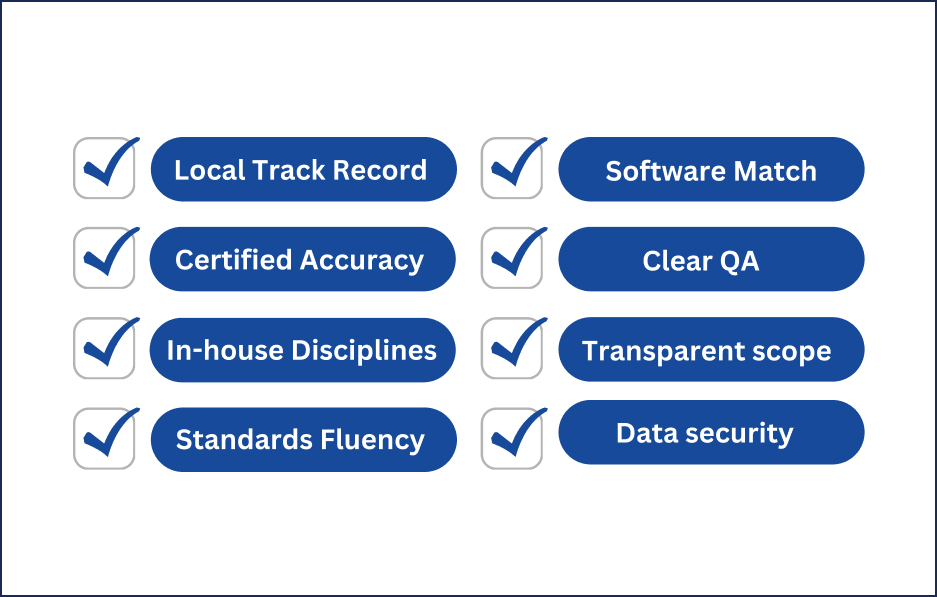
- Local track record — Australian projects, ideally in your sector and your state or territory.
- Certified accuracy — a stated tolerance, such as up to 10 millimeter, you can hold them to in writing.
- In-house disciplines — architecture, structure, and MEP handled by one coordinated team rather than scattered subcontractors.
- Software match — Revit, Navisworks, and Revizto, BIMCollab, or BIM 360 that suit your existing workflow.
- Clear QA — written verification of the model against the point cloud, signed off by a senior reviewer.
- Transparent scope — defined LOD, realistic turnaround, and a stated revision policy.
- Data security — clear answers on how your scans and models are stored, shared, and retained.
A supplier that ticks every box here is a genuinely capable scan to bim modeling services partner, not merely a low-cost file converter chasing volume.
Questions to Ask Before You Hire a Scan to BIM Company
Before you sign anything, put these to any prospective Scan to BIM company: What LOD will you deliver, and why is it right for this project? How do you register and verify the point cloud? Can you share a comparable Australian case study? Who reviews the model before handover, and what happens if site conditions differ from the scan?
Those answers quickly reveal whether you are dealing with an experienced Scan to BIM company or a reseller passing work down the chain. For a closer look at vetting, pricing, and realistic timelines, our guide on hiring experienced Scan to BIM experts in Australia expands on each point.
Final Thoughts
The right Scan to BIM partner does not just hand over files — they hand over confidence in your data. Prioritise certified accuracy, genuine knowledge of Australian standards, and a transparent quality process over the cheapest quote, and the model will repay that judgement across design, coordination, and construction.
If you are ready to compare suppliers on those terms, explore SmartCADD’s Scan to BIM services. Working from Seven Hills NSW (ABN 67 663 469 538), our team delivers point cloud to Revit models with accuracy of up to 10 Millimeter for contractors, builders, and architects right across Australia.